
"Santo Domingo region"
400 article(s) found

Taste rich Dominica coffee in the south introduce boutique coffee beans Santo Domingo coffee
The earliest coffee in Dominica was introduced from Martinique (the overseas province of France), dating back to the early 18th century. Dominica is an island country with a tropical climate. The temperature changes little throughout the year. Except for the lower temperature in the Central Cordillera Mountains, which can reach less than 0 ℃ in winter, the annual average temperature in other areas is between 25 and 30 ℃, which is affected by the mountain topography.

Smooth and smooth Dominica Coffee Flavor description Grinding degree Taste characteristics introduction of varieties
L'Or é al arrived in Santo Domingo in 1801. He abolished slavery on behalf of the French government. In 1802, Napoleon sent troops to conquer the whole island and ruled for several months. In October 1802, mixed-race and black people revolted against French rule and repelled the French army in 1803. On January 1, 1804, the rebels declared Santo Domingo independent and established the Republic of Haiti. But be defeated.

Boutique Santo Domingo Coffee Bean Manor Flavor and Taste introduction of Coffee Bean Origin and varieties
Coffee in Dominica is grown in highlands and lowlands, and its taste is slightly different. The upland is sour, but the taste is rich; the lowland is less sour and tastes smoother. Boutique coffee has become popular in recent years. High-quality coffee beans produced by some Dominican estates have a rich aroma, mellow taste and moderately bright sour taste, and have been bought with the more famous Puerto Rico beans or teeth.

Dominica Santo Domingo Coffee Flavor and Taste introduction to boutique coffee in manor area
Thousands of Tylenos were demoted to slavery and engaged in gold mining. Due to a series of oppression, hunger and disease, by 1535, the Tino had only 60,000 left. In 1501, King Ferdinand I and Isabella of Spain were the first to allow Caribbean colonists to introduce slaves from Africa. They began to arrive on the island in 1503. [3] in the early days of the Spanish island, the Spaniards were in the new.

Dominica Santo Domingo Coffee Flavor description, Grinding characteristics, Price, planting Environment
The Dominican Republic is a popular country for travelers. It lives next to Haiti on the island of Hispaniola in the West Indies, Dominica in the west and Haiti in the east. The whitest and softest white sand in the world, the cool sea breeze from the Atlantic and Caribbean and the warm sunshine in the tropics make it a holiday paradise on a par with Maldives and Hawaii.

Introduction to the flavor and taste of Dominica Santo Domingo coffee manor
In 1586, Captain Drake of England led a fleet to attack the city of Santo Domingo, but was repulsed by Spanish troops stationed there. Between 1605 and 1606, towns on the west coast of Hispaniola were often plundered by pirates, causing most of the local population to move inland. [3] at the beginning of the 17th century, French, Dutch and British pirates were operating in the west of Hispaniola, and France began to let farmers
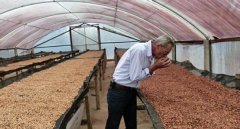
A brief introduction to the flavor, taste and aroma characteristics of Santo Domingo boutique coffee beans with intertwined aftertaste
The selection of Dominican coffee is usually done manually. The main basis for selection is according to the fullness of coffee particles, whether it is uniform, and then grade it. Generally speaking, coffee with full and uniform grains is easier to preserve. Only the fullest and most evenly grained coffee beans can be roasted to represent the best and finest coffee in the country. Unlike coffee produced in Haiti, Domi

Creamy Dominican Santo Domingo Coffee Flavor Description Grind Fine Coffee Taste Introduction
Located in the Jarabacoa area near Siwao, it has the largest farm in Dominica, Ramirez Estates, where Kadura varieties are mainly planted, and most of the coffee produced is sold to western countries and regions such as Europe and the United States. Ramirez Estate itself produces coffee in an environmentally conscious way. Dominican coffee with A

Coffee producing countries in Dominica introduce the flavor and taste characteristics of Santo Domingo coffee.
The earliest coffee in Dominica was introduced from Martinique (the overseas province of France), dating back to the early 18th century. Dominica is an island country with a tropical climate. The temperature changes little throughout the year. Except for the lower temperature in the Central Cordillera Mountains, which can reach less than 0 ℃ in winter, the annual average temperature in other areas is between 25 and 30 ℃, which is affected by the mountain topography.

Dominica Santo Domingo coffee with a pure and soft aroma
Unlike coffee produced in Haiti, most of the coffee grown in the Dominican Republic has been washed, which is a symbol of high quality. Miniga Coffee uses a washing method to treat coffee beans, so that the quality of treated coffee beans is more guaranteed. The coffee beans treated by washing method retain more original flavor than the drying method, and the aroma is pure and soft. Carefully selected and made in this way

Santo Domingo Coffee Brewing Area Fine Coffee Bean Taste Introduction
The earliest coffee in Dominica was introduced from Martinique (French overseas department), dating back to the early 18th century. Dominica is an island country with a tropical climate. The temperature changes little throughout the year. Except for the middle Cordillera mountain area, where the temperature is lower than 0℃ in winter, the average annual temperature in other areas is between 25 and 30℃, which is affected by the terrain of the mountains.
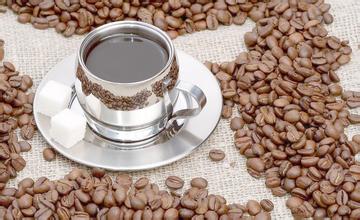
Introduction to the characteristics of high-quality coffee beans with flavor and taste in Dominica coffee producing areas
In 1677, about 4,000 French lived in 11 villages in the west of the island. In 1697, France and Spain ceded the western part of the island to France according to the Leswick Treaty of the Alliance War, formally recognizing French sovereignty over Haiti in the western part of the Spanish island, and the eastern part of the Spanish island was called East Santo Domingo. France continues to develop its agricultural economy on the island of Hispaniola.

Rich Dominican coffee Santo Domingo coffee
The Dominican Republic has also experienced a history of unrest and poverty, and now the country has implemented democratic elections and entered a period of stable development, but it has not yet formally established diplomatic relations with China, but has maintained so-called diplomatic relations with Taiwan. It seems that this has nothing to do with coffee, but in fact, it still has an impact. The exchanges between the two countries that have not established diplomatic relations are subject to many restrictions in all aspects, and of course they will.

Introduction to the characteristics of boutique coffee beans in Dominica Santo Domingo coffee producing area
On July 16, 1838, Juan Pablo Duvat and his colleagues established Trinity one experience (La Trinitaria), a Dominican secret society, with the aim of gaining independence from the rule of Haiti. Soon after, Matthias Ramon Malia and Francesco del Rosario Sanchez joined the Trinity experience. All three of them were later called duo.

Dominica Santo Domingo Coffee Flavor description Manor
The name Dominica, which originally means Sunday, was taken by Columbus when he first came to America to discover it, because it happened to be a Sunday. Today, this seemingly random name is quite far-sighted, because a good cup of coffee can bring people a relaxed and pleasant mood. The most distinctive feature of the introduction of Dominican coffee is freshness and elegance.

Dominica Santo Domingo Coffee Flavor description Grinding Variety characteristics of Fine Coffee
The earliest coffee in Dominica was introduced from Martinique (the overseas province of France), dating back to the early 18th century. Dominica is an island country with a tropical climate. The temperature changes little throughout the year. Except for the lower temperature in the Central Cordillera Mountains, which can reach less than 0 ℃ in winter, the annual average temperature in other areas is between 25 and 30 ℃, which is affected by the mountain topography.

Dominica Santo Domingo Coffee Flavor description introduction to the taste grindability of fine coffee beans in producing areas
In the west of Hispaniola, the harvest in the mountains above 1500 meters above sea level, the rich coffee Republic of Dominica (Dominican Republic) is adjacent to Haiti, both of which own the island of Hispaniola (Hispaniola). The best production site is the Barahona region in the southwest, but Honkalito (Juncalito) and Ocoa

Introduction to Dominica Santo Domingo Coffee Bean Grinding scale Variety
The introduction of Dominican coffee is characterized by freshness, elegance, fullness, excellent acidity and pleasant flavor (two colleagues agree with this). Such flavor characteristics are not only related to the variety and the quality of the soil, but also closely related to the picking and handling of raw beans. Dominica coffee is selected by the most expensive manual method, which is selected by workers.

Introduction to the characteristics of Dominica coffee flavor and taste manor area
At the beginning of the 17th century, when French, Dutch and British pirates were operating in the west of Hispaniola, France began to allow farmers and merchants to gradually colonize the western part of the Spanish island, which was blocked by mountains on the island. It didn't attract the attention of the Spaniards in the east. [3] in 1677, about 4,000 French lived in 11 villages in the west of the island. In 1697, France and

Flavor and taste characteristics of coffee manor in Dominica Coffee Bean introduction to Santo Domingo Coffee
After Santo Domingo returned to Spanish rule, the local people gradually formed a consensus on independent statehood. On November 30th, 1821, the former Governor of Santo Domingo, General Jos Nez de Cceres, proclaimed the founding of the country, named Haiti, Spain, and expected to merge under the Greater Colombian State led by President Bolivar of South America. [3] but in February 1822, nine weeks later, Haiti's